
|
Crash - Avro Lancaster - type B I - s/n LL791 VN°O |

|
|
|
Crash - Avro Lancaster - type B I - s/n LL791 VN°O |
|
| Fiche France-Crashes 39-45 modifiée le 23-01-2026 | |||||
| Date | Nation |
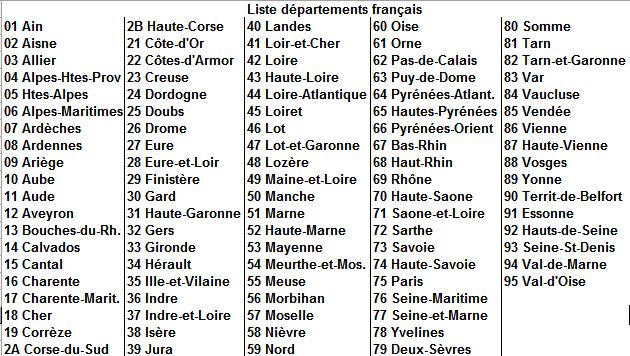 Département Département |
Unité | - | Mission |
|---|---|---|---|---|---|
| 25-02-1944 | Angleterre/Common. | Meurthe et Moselle | 50 Sq RAF | Augsburg (All) | |
| Grade | Prenom | Nom | Poste | Corps | Etat |
Lieu d'Inhumation |
Commentaires |
|---|---|---|---|---|---|---|---|
| P/O | William Herbert | Taylor | Pil | RAF | Prisonnier | 161785 - Né le 08/02/1916 - St-Helens, Lancs. UK - Capturé le 21/04/44 au S de Luchon (31) - Pow 6393 - Prison de Fresnes 94 (06/05/44)/Prison de Frankfurt (03/06/44)/Stalag Luft III Sagan (05/07/44)/Marlag-Milag Tarmstedt (05/02/45) - Rapport WO 208/3339/1190 (non trouvé) | |
| Sgt | Harrison Stanley "Stan" | Cammish | Mec | RAF | Echappé | 1624536 - Né le 21/09/1923 - Scarborough, UK - Se pose près d'Embermenil - Fuite avec réseau Françoise par Pyrénées/Espagne/Gibraltar - Retour UK 06/06/1944 - Rapport WO 208/3320/1944 | |
| Sgt | Kenneth Edric | Gilson | Nav | RAF VR | Décédé | Cim Com Embermenil (54) * | 902433 - 22 ans - Fils de Clifford Edric Gilson et Cassandra Jeanette Gilson, de Holcombe, Somerset UK |
| F/Sgt | David Thomas "Tom" | Balmanno | Bomb | RAAF | Prisonnier | 426020 - Né le 09/10/1923 à Brisbane, QLD, Australia - Capturé le 22/04/1944 à Luchon (31) - Pow 251 - Stalag Luft VII Bankau (10/07/44)/Stalag III-A Luckenwalde (08/02/45-20/05/45) | |
| F/sgt | John | Ansell | Rad | RAAF | Prisonnier | 410615 - Né le 21/06/1922 à Sydney, NSW, Australia - Capturé le 22/04/1944 à Luchon (31) - Pow 249 - Stalag Luft VII Bankau (10/07/44)/Stalag III-A Luckenwalde (08/02/45-20/05/45) - Rapport WO 208/3337/541 (non trouvé) | |
| Sgt | John | Acthim | Mit | RCAF | Prisonnier | J/88492 - Arrêté à la frontière espagnole le 21/04/1944 - Pow 248 Stalag Luft VII - Rapport WO 208/3336/180 (non trouvé) | |
| Sgt | Thomas John | Taylor | MitA | RAF | Prisonnier | 1677773 - Né le 13/03/1924 Stoke-on-Trent UK - PoW n°283 - Stalag Luft VII Bankau - Rapport WO 208/3339/1052 (non ytouvé) |
| Fiche tech | Correspondance grades | Abréviations utilisées | Filières d'évasion | Camps de Pow | Bases RAF/USAAF | Utilitaires |
|---|
|
Rapport Sgt Cammish: - ( I took off from SKELLINGTHORPE about 1830 hrs on 25 Feb 44 in a Lancaster aircraft to bomb AUGSBURG. On the way out we were hit by two enemy fighters about ten miles West of STRASBOURG. The pilot took evasive action, but, as the controls were u/s and the aircraft was on fire, he gave the order to bale out. I came down near EMBERMENIL (GERMANY, 1:250,000, Sheet 49, Q 20) about 2300 hrs (25 Feb) on the embankment of the STRASBOURG-PARIS railway. After burying my parachute in the snow I set off walking along the railway line. When I came to the station I heard two men talking in French. After listening for about half an hour I went up to the two men and asked them for help. I had hit my ankle in baling out and by now it was very swollen and made walking almost impossible. The men took me to a house in the village, where I was given civilian clothes and a meal. From this point my journey was arranged for me. APPENDIX C - The two porters whom I met in the station at EMBERMENIL (Sheet 49, Q 20) on 25 Feb 44 took me to the house of M. and Mme Georgette COLLIN who also lived in EMBERMENIL. They kept me for three days and during this time fitted me out with civilian clothes. About 0700 hrs on 28 Feb one of the two porters took me to the station and guided me to LUNEVILLE (6.30°E, 48.60°N.) where he took me to a house belonging to a member of the resistance organisation. I believe the woman who owned this house was called Mme. CHAPLEUR. She and her daughter ran a general store and her son had been deported to GERMANY. While I was here I was told that my navigator (Sgt. GILSON) had been killed. I also met my rear gunner (Sgt. TAYLOR) at this house. We were here together for two or three days and were both given identity cards. Our R.A.F. photographs were not used, as we were told that they were "no good". In the early afternoon of 1 Mar, TAYLOR and I were taken by a member of the resistance organisation and the same porter who had guided me to LUNEVILLE, to NANCY (N.W. EUROPE, 1:250,000, Sheet 9, U 81). There we were taken to a house belonging to a doctor who was also in the resistance movement. This doctor (name and address unknown) telephoned to the Chief of Police (M. VAN DROMME) who sent a gendarme in a car to take us away. At VAN DROMME's house we met our wireless operator (F/Sgt. ANSELL). VAN DROMME told us that he had a son serving with the fighting French Navy in the U.K. His son's address was:- Quartier-maitre Robert VAN DROMME, either P.O. Box 255, Postal Section 644, London, or P.O. Box 244, Postal Section 655, London. Original) - ( PARTIE I - WO 208/3320/1944 - Source : Nat Arch UK - Traduction Ph Laroyenne): J'ai décollé de Skellingthorpe vers 18h30 le 25 février 1944 à bord d'un Lancaster pour bombarder Augsbourg. En route, nous avons été touchés par deux chasseurs ennemis à une quinzaine de kilomètres à l'ouest de Strasbourg. Le pilote a effectué une manœuvre d'évitement, mais, les commandes étant hors service et l'avion en feu, il a donné l'ordre de sauter en parachute. J'ai atterri près d'Embermenil (Feuille 49, ZNG wQ2303) vers 23h00 (25 février) sur le talus de la voie ferrée Strasbourg-Paris. Après avoir enfoui mon parachute dans la neige, j'ai commencé à marcher le long de la voie ferrée. Arrivé à la gare, j'ai entendu deux hommes parler français. Après avoir écouté pendant une demi-heure environ, je me suis approché d'eux et leur ai demandé de l'aide. Je m'étais blessé à la cheville en sautant et elle était maintenant très enflée, ce qui rendait la marche presque impossible. Les hommes m'ont conduit dans une maison du village, où l'on m'a donné des vêtements civils et un repas. À partir de là, mon voyage a été organisé. ANNEXE C - Les deux porteurs que j'ai rencontrés à la gare d'Embermenil le 25 février 1944 m'ont emmené chez Mr et Mme Georgette Collin, qui habitaient également à Embermenil. Ils m'ont gardé trois jours et, pendant ce temps, m'ont fourni des vêtements civils. Vers 7 h le 28 février, l'un des deux porteurs m'a ramené à la gare et m'a conduit à Lunéville (6,30°E, 48,60°N) où il m'a emmené dans une maison appartenant à un membre de la Résistance. Je crois que la propriétaire de cette maison s'appelait Mme Chapleur. Elle et sa fille tenaient une épicerie et son fils avait été déporté en Allemagne. Pendant que j'étais là, on m'a annoncé que mon navigateur (le Sgt Gilson) avait été tué. J'ai également rencontré mon mitrailleur arrière (le Sgt T J Taylor) dans cette maison. Nous y sommes restés deux ou trois jours et avons reçu chacun une carte d'identité. Nos photos de la RAF n'ont pas été utilisées, car on nous a dit qu'elles étaient « inutilisables ». En début d'après-midi du 1er mars, Taylor et moi avons été conduits par un membre de la Résistance et le même porteur qui m'avait guidé jusqu'à Lunéville, à Nancy (Feuille 9, ZNG vU8512). Là, nous avons été emmenés chez un médecin, lui aussi résistant. Ce médecin (dont j'ignore le nom et l'adresse) a téléphoné au commissaire de police (Mr Van Dromme) qui a dépêché un gendarme en voiture pour nous emmener. Chez Van Dromme, nous avons rencontré notre opérateur radio (le sergent-chef Ansell). Van Dromme nous a dit qu'il avait un fils servant dans la marine française combattante au Royaume-Uni. L'adresse de son fils était : Quartier-maître Robert Van Dromme, soit B.P. 255, Section postale 644, Londres, soit B.P. 244, Section postale 655, Londres. Rapport Sgt Cammish: - ( We remained with VAN DROMME for six days, and on 6 Mar we were taken in a police car to MAZERULLES (Q 0119). Here we were taken to the house of M. DURANT who was the head of the resistance movement for that area. We remained with him for about five weeks. During that time he received some arms and ammunition by plane. DURANT was anxious to explain to me all the arrangements he had for the receiving of arms, etc., but I told him that it was better that I should know nothing. At his house I met P/O TAYLOR (my pilot) and 2/Lt. McMAHON, U.S.A.A.F., who arrived about three weeks after me. On 12 Apr, Sgt. TAYLOR, F/Sgt. ANSELL, and I, guided by a Frenchman, were taken by train to NANCY (U 81). P/O TAYLOR and 2/Lt. McMAHON left at the same time, but went by car and we met them and two other Americans, one of whom was called 2/Lt. J. LILLES, at a house in NANCY that night. At midnight (12 Apr) we all caught a train to PARIS, and on the station we were joined by an R.A.F. navigator, Charles JACKSON, who lives at STOKE-ON-TRENT. In PARIS the party split up, and JACKSON and I stayed at an unknown address for two days. We were then taken to another house for one day and after that sent to a flat belonging to M. Henri DREYDIER, 10 rue de TURBIGO. DREYDIER was a member of MAQUI and he sent us to stay with a friend of his who lived nearby. On 18 Apr JACKSON and I were taken to the station by the same man who had accompanied me from NANCY. On the platform we met the rest of our original party. We had two guides - a husband and wife - who were members of the resistance in TOULOUSE. We boarded the train at 2100 hrs (18 Apr) and arrived in TOULOUSE about 1300 hrs the next day. The journey was without incident. On the station at TOULOUSE we were met by a guide, who were told was to take us across the mountains, and our old guides left us. He bought us tickets on to LAZZEMEZAN (Sheet 39, Z 49). The train pulled up just before entering LAZZEMEZAN and we all jumped off on to an embankment. We were taken to a disused hotel, where we met ten more Americans and some French and Belgian evaders. Our party now numbered about 35. On 20 Apr we were taken in a car driven by an English-speaking man, who told us he was a New Zealander, to a hut about four miles away. We spent the night there and set off the next day (21 Apr) at about 0700 hrs. We had two guides, one of whom had a Sten gun and the other a revolver.Original) - ( PARTIE II): Nous sommes restés six jours avec Van Dromme, puis le 6 mars, nous avons été conduits en voiture de police à Mazerulles (ZNG wQ0119). Là, nous avons été emmenés chez Mr Durant, chef de la Résistance locale. Nous sommes restés chez lui environ cinq semaines. Pendant ce temps, il a reçu des armes et des munitions par avion. Durant tenait à m'expliquer tous les arrangements qu'il avait pris pour la réception des armes, etc., mais je lui ai dit qu'il valait mieux que je n'en sache rien. Chez lui, j'ai rencontré le P/O Taylor (mon pilote) et le 2/Lt McMahon, de l'USAAF, arrivés environ trois semaines après moi. Le 12 avril, le Sgt Taylor, le Sgt/C Ansell et moi, guidés par un Français, avons été conduits en train à Nancy. McMahon est parti en même temps, mais en voiture. Nous les avons retrouvés, ainsi que deux autres Américains, dont le 2/Lt J. Lilles, dans une maison à Nancy ce soir-là. À minuit (12 avril), nous avons tous pris un train pour Paris. À la gare, nous avons été rejoints par un navigateur de la RAF, F/Sgt Charles Jackson, qui habitait à Stoke-on-Trent. À Paris, le groupe s'est séparé. Jackson et moi avons passé deux jours à une adresse inconnue. Nous avons ensuite été conduits dans une autre maison pour une journée, puis dans un appartement appartenant à Mr Henri Deydier, au 10 rue de Turbigo. Deydier était membre du Maquis et il nous a envoyés chez un ami qui habitait à proximité. Le 18 avril, Jackson et moi avons été conduits à la gare par le même homme qui m'avait accompagné depuis Nancy. Sur le quai, nous avons retrouvé le reste du groupe. Nous avions deux guides, un couple de résistants toulousains. Nous avons embarqué à bord du train à 21 h (le 18 avril) et sommes arrivés à Toulouse vers 13 h le lendemain. Le voyage s'est déroulé sans incident. À la gare de Toulouse, un guide nous attendait. On nous avait dit qu'il devait nous faire traverser les montagnes, et nos anciens guides nous ont quittés. Il nous a acheté des billets pour Lannemezan (Feuille 39, FL3 aZ4194). Le train s'est arrêté juste avant d'entrer dans Lannemezan et nous avons tous sauté du train sur un talus. On nous a conduits à un hôtel désaffecté, où nous avons rencontré une dizaine d'Américains et quelques résistants français et belges. Notre groupe comptait alors environ 35 personnes. Le 20 avril, un homme anglophone, qui nous a dit être Néo-Zélandais, nous a emmenés en voiture jusqu'à une cabane à environ six kilomètres de là. Nous avons passé la nuit sur place et sommes partis le lendemain (21 avril) vers 7h00. Nous avions deux guides, dont l'un était armé d'un pistolet-mitrailleur Sten et l'autre d'un revolver. Rapport Sgt Cammish: - ( We walked that day until 2100 hrs and the next day started off again at 0700 hrs. That day we marched for 23 hours, stopping only to eat some bread which we carried in our kitbags. At SUPERBAGNERES (Sheet 85, 1.15°E. 47.50°N.) we rested in a hut. Here our guides were changed. In the morning (23 Apr) our new guides left us and told us that they would be returning at night with food. At about 1800 hours one of the party, who was on watch outside the hut, reported that about 30 Germans were coming up the hill towards us. There was general confusion in the hut, as most of the party were resting or sleeping. We scrambled up the slope in the opposite direction from the Germans, and after we had gone a short distance they shouted at us to halt. When they were within 50 or 60 yards of us they started firing. The hill was thickly forested, and I ran on until I was exhausted, when I hid behind a tree. I heard later that many of the party gave themselves up when the firing started and that several were caught in the hut. Before the guides went off they had given us two Sten guns, and I was also told that one of our party (name unknown) had opened up on the Germans and killed four of them. After I had been hiding for about fifteen minutes I saw 2/Lt. DROLLINGER and T/Sgt. A. BARLOW. We had between us a compass and a map and we set off in the direction of the border. I do not know where we crossed the frontier, but the journey took us 19 hours. We then went to on to VIELLA (IBERIAN PENINSULA, 1:250,000, Sheet S 9680, K 63), where we were arrested by the civil authorities and sent to a hotel. Although we were searched and all our money was taken from us, we were not interrogated. We remained in VIELLA for 16 days and were joined by T/Sgt. W.B. HENDRICKSON, who had been with our party at the time the Germans rounded us up. While I was here I met a Frenchman who had crossed the frontier a few days after us with another party. He told me that the Germans had shot three of the Frenchmen in our party. He also said he had seen the party at a station (I do not remember the name) walking along with their hands behind their heads. Several of them were bandaged up and looked as though they had been beaten up. Several other Frenchmen and Americans whom I met later at VIELLA bore this story out. We left VIELLA on 9 May and our journey was then: - LERIDA (10 days) - ALHAMA (10 days) - MADRID (3 days) and GIBRALTAR.Original) - ( PARTIE III): Nous avons marché ce jour-là jusqu'à 21h00 et sommes repartis le lendemain à 7h00. Nous avons marché pendant 23 heures, ne nous arrêtant que pour manger le pain que nous avions dans nos sacs. À Superbagneres (1,15°E, 47,50°N), nous nous sommes reposés dans un refuge. Nos guides ont été changés. Le matin du 23 avril, nos nouveaux guides nous ont quittés en nous disant qu'ils reviendraient le soir avec de la nourriture. Vers 18h00, un membre du groupe, qui faisait le guet à l'extérieur du refuge, a signalé qu'une trentaine d'Allemands montaient la colline en notre direction. La confusion régnait dans le refuge, car la plupart des membres du groupe se reposaient ou dormaient. Nous avons grimpé la pente en direction opposée aux Allemands, et après quelques mètres, ils nous ont crié de nous arrêter. Lorsqu'ils se sont trouvés à une cinquantaine de mètres de nous, ils ont ouvert le feu. La colline était densément boisée et j'ai couru jusqu'à l'épuisement, puis je me suis caché derrière un arbre. J'ai appris plus tard que plusieurs membres du groupe s'étaient rendus lorsque les tirs ont commencé et que plusieurs avaient été pris au piège dans la cabane. Avant de partir, les guides nous avaient donné deux pistolets-mitrailleurs Sten, et on m'a également dit que l'un des nôtres (dont j'ignore le nom) avait ouvert le feu sur les Allemands et en avait tué quatre. Après une quinzaine de minutes passées caché, j'ai aperçu le 2Lt Drollingeret le Sgt/C A Barlow. Nous avions une boussole et une carte, et nous sommes partis en direction de la frontière. J'ignore où nous l'avons franchie, mais le trajet a duré 19 heures. Nous avons ensuite rejoint Viella (K 63), où nous avons été arrêtés par les autorités civiles et conduits dans un hôtel. Bien que fouillés et dépouillés de tout notre argent, nous n'avons pas été interrogés. Nous sommes restés à Viella pendant 16 jours et avons été rejoints par le Sgt/C W Hendricksonon, qui était avec nous au moment de notre arrestation par les Allemands. Pendant mon séjour, j'ai rencontré un Français qui avait franchi la frontière quelques jours après nous avec un autre groupe. Il m'a raconté que les Allemands avaient abattu trois Français de notre groupe. Il a également dit avoir vu ce groupe à une gare (dont j'ai oublié le nom), marchant les mains derrière la tête. Plusieurs d'entre eux avaient des bandages et semblaient avoir été passés à tabac. Plusieurs autres Français et Américains rencontrés plus tard à Viella ont confirmé ce récit. Nous avons quitté Viella le 9 mai et notre voyage s'est déroulé comme suit : Lérida (10 jours), Alhama (10 jours), Madrid (3 jours) et Gibraltar. Photo de la tombe du Sgt Gilson au cim d'Embermenil sur www.pprune.org (Lien transmis par Claude Dannau) |