|
Crash - Halifax - type B III - s/n MZ630 ZA°S |

|
|
|
Crash - Halifax - type B III - s/n MZ630 ZA°S |
|
| Fiche France-Crashes 39-45 modifiée le 29-01-2026 | |||||
| Date | Nation |
 Département Département |
Unité | - | Mission |
|---|---|---|---|---|---|
| 03-06-1944 | Angleterre/Common. | Eure | 10 Sq RAF | Trappes (78): Installations ferroviaires - Transportation Plan | |
| Grade | Prenom | Nom | Poste | Corps | Etat |
Lieu d'Inhumation |
Commentaires |
|---|---|---|---|---|---|---|---|
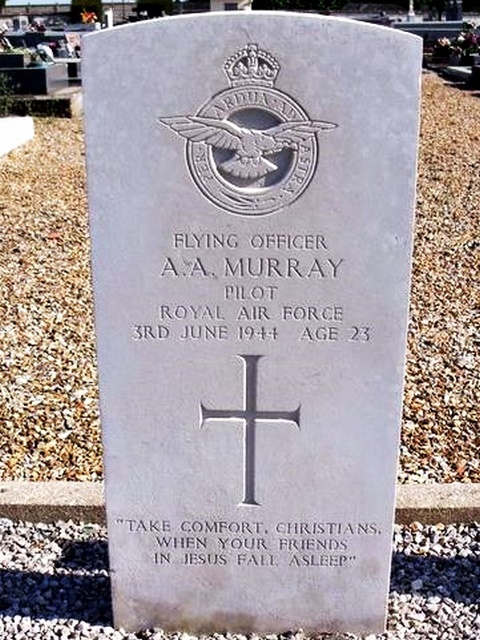
| F/O | Alexander Archibald | Murray | Pil | RAF VR | Décédé | Cim St-André-de-l'Eure (28) T4 * | 145681 - 23 ans - Né le 01/02/1921 Motherwell, Lanarks. Scotland - Fils de James Smith et Mary (McKillop) Murray, de Cleland, Lanarkshire UK - 8e mission |
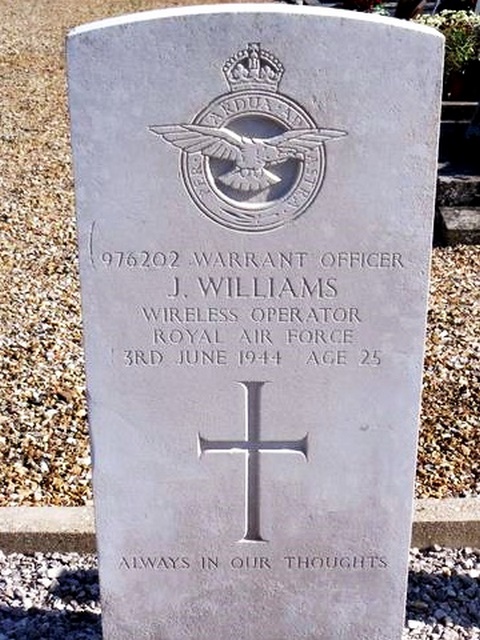
| W/O | John | Williams | Rad | RAF VR | Décédé | Cim St-André-de-l'Eure (28) T2 * | 976202 - 26 ans - Né le 02/04/1918 Pontypool, Monmouths. UK - Fils de Frederick Thomas et Mary Ann Williams, de Winton, Bournemouth, Hampshire UK - 41e mission |
| Sgt | John Neville | Osselton | Mec | RAF | Prisonnier | 1892507 - Né le 12/05/1923 Middlesbrough, Yorks. UK - Fils de Charles Turney et Evelyn Maude (Scupham) Osselton - Conjoint de Mary Evelyn Phillips - 7e mission - Capturé le 28/06/1944 par la Gestapo à Paris (75) - Prison de Fresnes (94) (28/06/44)/Camp de Buckenwald (20/08/44)/Stalag Luft III Sagan (22/10/44)/Stalag III-A Luckenwalde (04/02/44) - PoW N°8109 (possible) - Rapport WO 208/3337/515 - †1999 | |
| F/O | Stanley Albert | Booker | Nav | RAF | Prisonnier | 51872 - Né le 25/04/1922 - Wombwell, Yorkshire UK - Fils de Albert et Lilian Booker - Conjoint de Marjorie Champney - 7e mission - Capturé par la Gestapo le 01/07/1944 à Paris (75) - Prison de Fresnes (94) (01/07/44)/Camp de Buckenwald(20/08/44) Subit de mauvais traitements/Stalag Luft III Sagan (21/10/44)//Stalag III-A Luckenwalde (07/01/45) - Pow 8045 - Libéré le 20/05/1945 - Rapport WO 208/3339/1273 non disponible - †2025 | |
| Sgt | Ernest Frederick | Stokes | Bomb | RAF | Prisonnier | 1399125 - Né le 14/06/1915 London UK - Fils de Robert William et Charlotte Elizabeth (Pearson) Stokes - Conjoint de Eillen Alice Arnold - 1e mission - Blessé - Capturé le 03/06/1944 vers Paris - Pow 4025 - Prison Paris (05/07/44)/Stalag IX-C Bad-Sulza (14/07/44) - Libéré le 02/04/1945 - †1982 | |
| Sgt | Clifford Lionel | Hallett | MitS | RAF | Echappé | 1585043 - Né le 09/09/1922 Yeovil, Somerset UK - Fils de Lionel John et Dolly Violet Kathleen (Dodge) Hallett - Conjoint de Muriel Ivy Selwood - 10e mission - Rejoint le maquis de Fréteval (41) - Retour UK le 18/08/1944 - Rapport WO 208/3321/2079 - †2013 | |
| Sgt | Terence "Terry" | Gould | MitA | RAF | Prisonnier | 1262334 - Né le 24/03/1921 Glamorgan, South Dales, UK - Conjoint de Betty Margaret Pipe - 12e mission - Capturé le 13/07/44 par la Gestapo à Paris (75) - Prison de Fresnes (94)/Camp de Buckenwald (Août 44)/Stalag Luft III Sagan (22/10/44)//Stalag III-A Luckenwalde (Février 45) – PoW N°8091 (possible) - Libéré 21/05/1944 - Rapport WO 208/3340/1803 - †1953 |
| Fiche tech | Correspondance grades | Abréviations utilisées | Filières d'évasion | Camps de Pow | Bases RAF/USAAF | Utilitaires |
|---|
|
Rapport de perte - (1. The Halifax took off from Melbourne at about 2245 hours. The moon was about three quarters full and the night was clear and cloudless. The outward journey was quite uneventful and the target was reached and bombed on time whitout incident. 2. About 15 minutes after leaving the target when they were flying at 10,000 ft on a straight and level course, the Mid-Upper Gunner observed six aircraft shot down in quick succession. Shortly afterwards the Rear Gunner sighted an aircraft on the starboard quarter and below at about 1,000 yards range. He asked the Mid-Upper Gunner whether he could see it, but Sgt Hallett was not able to do so. The Rear Gunner then gave 'Corskscrew' Starboard - go!'. The Pilot at once executed this manoeuvre and when he had completed three corkscrew the Rear Gunner said 'I think we have lost him. Resume course - Go!' 3. Just as the Pilot levelled out the fighter attacked from the starboard quarter and well below scoring hits with tracer in the port outer engine. After a very short interval a second burst was fired from the same direction and this scored hits in the starboard outer engine. The Mid-Upper Gunner did not sight the fighter throughout these attacks and did not fire his guns. From his observations of the tracer he believes that the enemy opened fire at about 800 yds range. 4. Both outer engines caught fire simultaneously after the second attack and flames streamed back from the rear end of the cowlings, but the wing did not catch fire immediately. Informents believes that the Pilot and Flight Engineers attempted to feather the damaged engines but were unable to do se. They had found difficulty in doing so on a previous occasion.Original) - (source : National Archives de Kew – K.231 – Partie I - Traduction Google): 1. Le Halifax a décollé de Melbourne vers 22 h 45. La lune était pleine aux trois quarts environ et la nuit était claire et sans nuages. Le voyage aller s'est déroulé sans incident et la cible a été atteinte et bombardée à temps sans incident. 2. Environ 15 minutes après avoir quitté la cible alors qu'ils volaient à 10 000 pieds sur une trajectoire rectiligne et horizontale , le Mid-Upper Gunner a observé six avions abattus en succession rapide. Peu de temps après, le mitrailleur arrière a aperçu un avion sur le quart tribord et en dessous à une distance d'environ 1 000 mètres. Il a demandé au mitrailleur intermédiaire s'il pouvait le voir, mais le Sgt Hallett n'a pas pu le faire. Le mitrailleur arrière a alors annoncé ' 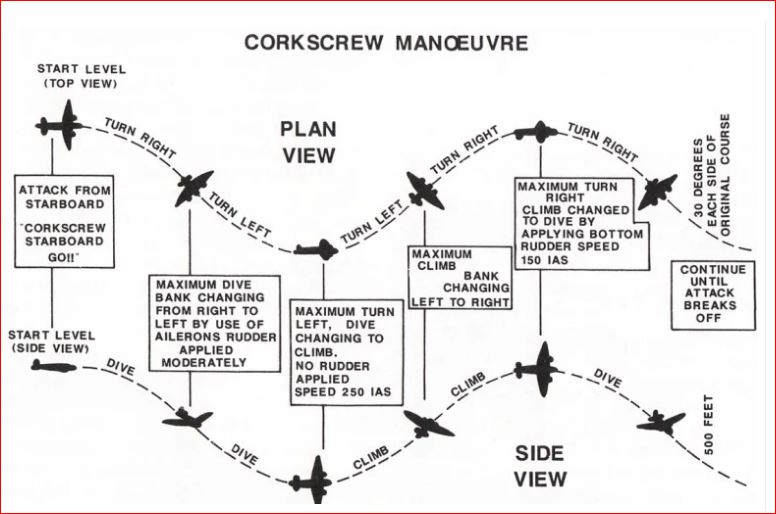 Image issue du site 425alouette.wordpress.comcorkscrew tribord - allez-y !'. Le pilote exécuta aussitôt cette manœuvre et lorsqu'il eut terminé trois corkscrew, le mitrailleur arrière dit : ‘Je pense que nous l'avons perdu. Reprenez le cours - Allez !' 3. Juste au moment où le pilote se remettait en ligne, le chasseur attaquait depuis le quart tribord et bien en dessous, marquant des coups avec un traceur dans le moteur extérieur bâbord. Après un très court intervalle, une seconde rafale a été tirée dans la même direction et a touché le moteur extérieur tribord. Le Mid-Upper Gunner n'a pas vu le combattant tout au long de ces attaques et n'a pas tiré avec ses armes. D'après ses observations du traceur, il pense que l'ennemi a ouvert le feu à une distance d'environ 800 mètres. 4. Les deux moteurs extérieurs ont pris feu simultanément après la deuxième attaque et les flammes ont jailli de l'arrière des capots, mais l'aile n'a pas pris feu immédiatement. Les informateurs pensent que le pilote et les mécaniciens de bord ont tenté de mettre en drapeau les moteurs endommagés, mais n'ont pas pu le faire. Ils avaient rencontré des difficultés à le faire à une occasion précédente. Rapport de perte - (5. The Mid Upper Gunner continued to search for the enemy without success and he received no further indication of its whereabout from the Rear Gunner. The Pilot took no evasive action after the attack developed and the Lancaster continued to fly a normal course. About one minute later the enemy fired two further bursts in quick succession. The first of these scored hits on the port inner engine which alsoc caught fire and the second in the rear part of the fuselage in the vicinity of the D.R. compass. These attacks also came from well below, the first apparently dead astern and the second from the fine starboard quarter. Immediately after the last attack the order to prepare to bale out was given. Up to this time informant had remained in his turret without baing able to take effective action. He believes that all attempts to feather any of the damage engines had failed. 6. Sgt Hallett now left his turret, donned his parachute and opened the rear exit door. He then saw an Me.110 flying on a parallel course on the port side and about 150 ft below. He watched it overtake the Lancaster and did not see it again. The Rear Gunner had by this time left his turret and was close beside informant, searching for the plug to which to connect his intercom. Then the Flight Engineer came hurrying aft and told them to bale out. 7. The Mid Upper Gunner left at once feet first with his helmet off. He pulled the ripcord as soon as he was clear and just after the parachute opened there was a loud explosion. He then saw that the Lancaster had turned on to a reciprocal course and was diving straight to earth. He saw it hit the groung and there was a bright flash. His parachute functioned normally and he landed safely on the perimeter track of Illiers-L'Eveque airfield (Eure). The lancaster crashed two fields away. 8. On the ground informant waas told that one member of his crew broke a leg and was taken prisoner. He also believes that the Rear Gunner was evading.Original) - (source : National Archives de Kew – K.231 – Partie II - Traduction Google): 5. Le Mid Upper Gunner a continué à chercher l'ennemi sans succès et il n'a reçu aucune autre indication de sa position de la part du Rear Gunner. Le pilote n'a pris aucune mesure d'évitement après l'attaque et le Lancaster a continué à suivre une trajectoire normale. Environ une minute plus tard, l'ennemi a tiré deux autres rafales en succession rapide. Le premier d'entre eux a touché le moteur intérieur bâbord qui a également pris feu et le second la partie arrière du fuselage à proximité du Distance Reading CompassD.R. Compass. Ces attaques sont également venues de bien en dessous, la première apparemment par l'arrière et la seconde du quartier tribord. Immédiatement après la dernière attaque, l'ordre de se préparer à sauter fut donné. Jusqu'à ce moment l'informateur était resté dans sa tourelle sans pouvoir agir efficacement. Il croit que toutes les tentatives pour mettre en drapeau l'un des moteurs endommagés ont échoué. 6. Le Sgt Hallett a maintenant quitté sa tourelle, a enfilé son parachute et a ouvert la porte de sortie arrière. Il a alors vu un Me.110 voler sur une route parallèle à bâbord et à environ 150 pieds en dessous. Il l'a regardé dépasser le Lancaster et ne l'a plus revu. Le mitrailleur arrière avait à ce moment-là quitté sa tourelle et était proche de l'informateur, cherchant la prise à laquelle brancher son interphone. Ensuite, le mécanicien de bord s'est précipité à l'arrière et leur a dit de sauter. 7. Le mitrailleur supérieur moyen est parti immédiatement les pieds en avant sans son casque. Il a tiré surla poignée dès qu'il a été dégagé et juste après l'ouverture du parachute, il y a eu une forte explosion. Il a alors vu que le Lancaster avait pris un cap réciproque et plongeait directement vers la terre. Il l'a vu toucher le sol et il y a eu un flash lumineux. Son parachute a fonctionné normalement et il s'est posé en toute sécurité sur la piste périphérique de l'aérodrome d'Illiers-L'Evêque (Eure). Le lancaster s'est écrasé deux champs plus loin. 8. Sur le terrain, l'informateur a dit qu'un membre de son équipage s'était cassé une jambe et avait été fait prisonnier. Il pense également que le mitrailleur arrière s’est enfui. Rapport du Sgt Hallett - (I was a member of the crew of a Halifax Mark 3 which took off from MELBOURNE at 2245 hrs on 2 Jun 44 to take part in a raid on TRAPPES (N.W. EUROPE 1:250,000, Sheet 7, R 83). On the return flight, when 20 minutes from the target, we were attacked by a fighter and three engines were put out of action. We got the order to 'stand by', and the flight engineer told me to bale out. I came down, early on 3 Jun, on an aerodrome at MARCILLY-LA-CAMPAGNE (R 2147). I hid my parachute, harness and mae-west in a gorse bush between the perimeter track and the roadway, and got off the aerodrome as quickly as possible. There was no fence, but I had to jump a ditch. I stopped in a wood near the aerodrome about 0230 hrs, but moved off when I heard voices and dogs. I walked about four miles and hid another wood. After a little I resumed my walk. I dodget round two villages and walked through a wood. I then watched a farmhouse for a bit, walking round it. I went to the farmhouse and was immediately taken in, given food and sent to bed. When I woke up six hours later I found that all my uniform and all my escape kit, except the money, had been taken away. I was told that I would be taken away by the Resistance movement. Three hours later, a group of patriots took me in the back of a car to NONANCOURT (R 2139), 3 Km away, where I was sheltered in a house for 13 days - till about 16 Jun. That day the resistance group came for me again, bringing me an identity card. I walked through NONANCOURT, was picked up in the car, and taken to a house, the location of which I do not know. Here I met the local chief of the resistance movement. We stopped the night in the house. Next day (17 Jun) the chief and a guide escorted me and 2Lt LEWIS , USAAF, five miles on foot in the direction of DREUX (R33). Another guide then took us a further ten miles to a cafe. From the cafe we were taken 90 km by car to a camp at CHATEAUDUN. I remained in the camp till the arrival of the French Forces on 14 Aug. I was later evacuated via LE MANS and BAYEUX. Original) - (source : National Archives de Kew – WO 208/3321/2079 - Traduction Google): J'étais membre de l'équipage d'un Halifax Mark 3 qui a décollé de Melbourne à 22 h 45 le 2 juin 44 pour participer à un raid sur Trappes (Feuille 7 ZNG vR8036). Au retour, à 20 minutes de la cible, nous avons été attaqués par un chasseur et trois moteurs ont été mis hors de combat. Nous avons reçu l'ordre de ‘rester prêt’, et le mécanicien de bord m'a dit de sauter. Je suis descendu, tôt le 3 juin, sur un aérodrome de Marcilly-la-Campagne (vR2147). J'ai caché mon parachute, mon harnais et ma Gilet de sauvetage gonflable (du nom de Mary 'Mae' West au buste généreux) Mae West dans un buisson d'ajoncs entre la piste périphérique et la chaussée, et je suis sorti de l'aérodrome le plus rapidement possible. Il n'y avait pas de clôture, mais j'ai dû sauter un fossé. Je me suis arrêté dans un bois près de l'aérodrome vers 02h30, mais je suis parti quand j'ai entendu des voix et des chiens. J'ai marché environ quatre miles et je me suis caché dans un autre bois. Au bout d'un moment j'ai repris ma marche. J'ai contourné deux villages et j'ai traversé un bois. J'ai ensuite observé un peu une ferme, en faisant le tour. Je suis allé à la ferme et j'ai été immédiatement recueilli, nourri et envoyé au lit. Quand je me suis réveillé six heures plus tard, j'ai découvert que tout mon uniforme et tout mon kit d'évacuation, à l'exception de l'argent, avaient été emportés. On m'a dit que j'allais être emmené par la Résistance. Trois heures plus tard, un groupe de patriotes m'a emmené à l'arrière d'une voiture à Nonancourt (vR2139), à 3 km, où j'ai été abrité dans une maison pendant 13 jours - jusqu'au 16 juin environ. Ce jour-là la résistance groupe est revenu me chercher, m'apportant une carte d'identité. J'ai traversé Nonancourt à pied, j'ai été pris en voiture et emmené dans une maison dont je ne connais pas l'emplacement. J'y ai rencontré le chef local du mouvement de résistance. Nous nous sommes arrêtés la nuit dans la maison. Le lendemain (17 juin) le chef et un guide m'ont escorté ainsi que le 2Lt Lewis, USAAF, à cinq miles à pied en direction de Dreux (vR3236). Un autre guide nous a ensuite emmenés dix miles supplémentaires jusqu'à un café. Du café, nous avons été conduits à 90 km en voiture jusqu'à un camp à Châteaudun. Je suis resté au camp jusqu'à l'arrivée des Forces françaises le 14 août. J'ai ensuite été évacué via Le Mans et Bayeux. Aidants cités par www.evasioncomete.be : - Mr Elie Thorossov, La Madelaine de Nonancourt (27) - Dr René Dufour, Chartres (28) Rapport F/O Booker: - (1. Evasion and capture - I was navigator of a Halifax III which took off from Melbourne at 2300 hrs on 2 Jun 44 to bomb Trappes. On the return journey we were attacked by fighters and the petrol tanks were hit and caught fire. The aircraft got out of control and five of the crew baled out at about 5,600 ft. The pilots, F/O. Murray and W/O. Williams, were trapped in the aircraft and I heard later that their bodies were found in the wreckage. I landed in a cornfield and after burying my parachute and mae west set off walking in the direction of the Spanish frontier. After some twelve hrs walking I was within 6 kms of Dreux. I began to realize that if I were to complete the journey I would need assistance in the form of a passport, food, clothing, etc. I approached an old man working in a field, offered him a hundred francs and asked if he could help me. He took me to a nearby château where a widow and her elderly sister lived. These women were both English. I was given a complete outfit of clothes and arrangements were made to provide me with an identity card. The same evening (3 Jun) a French woman came and took me to her house at Muzy. This woman was in charge of the local F.F.I. and her house was continually being used by them. I remained here until 6 Jun, when I was joined by my engineer, Sgt. Osselton. The same day we returned to the château where we met an American air gunner Christian name was George. We three stayed here for three days until a German patrol was seen approaching the house, when we were taken by a friend of the family's and hidden in a nearby thicket. As soon as the Germans had left we three returned to our friends at Muzy, where we were joined by another American, a Mustang pilot. Shortly after our arrival we were taken by a member of the F.F.I. to a large wood nearby, where we remained in hiding for two nights. At the end of the two days the matron of the sanitorium asked us to go elsewhere as several of her nurses had German sympathies and were suspicious of her activities. I again made contact with our host at Muzy and that night the same member of the F.F.I. who had helped us previously, came and took the two Americans to a nearby farm, and Sgt. Osselton and myself to the house of a widow in Muzy. We remained here for three days when we had to leave as arrangements were being made for German officers to be billeted in the house. Original) - ( PARTIE I - WO 208/3339/1273 - Source : Nat Arch UK - Traduction Ph Laroyenne): 1 Évasion et capture - J'étais navigateur à bord d'un Halifax III qui a décollé de Melbourne à 23h00 le 2 juin 1944 pour bombarder Trappes. Au retour, nous avons été attaqués par des chasseurs. Les réservoirs d'essence ont été touchés et ont pris feu. L'avion est devenu incontrôlable et cinq membres d'équipage ont sauté en parachute à environ 1 700 mètres d'altitude. Les pilotes, le F/O. Murray et le W/O. Williams, étaient coincés dans l'appareil et j'ai appris plus tard que leurs corps avaient été retrouvés dans l'épave. J'ai atterri dans un champ de maïs et, après avoir enterré mon parachute et ma Gilet de sauvetage gonflable (du nom de Mary 'Mae' West au buste généreux) Mae West, j'ai commencé à marcher en direction de la frontière espagnole. Après une douzaine d'heures de marche, j'étais à moins de 6 km de Dreux. J'ai commencé à comprendre que, pour terminer le voyage, j'aurais besoin d'aide : passeport, nourriture, vêtements, etc. J'ai abordé un vieil homme qui travaillait dans un champ, je lui ai offert cent francs et lui ai demandé s'il pouvait m'aider. Il m'a emmené dans un château voisin où vivaient une veuve et sa sœur âgée. Ces femmes étaient toutes deux anglaises. On m'a fourni un équipement complet et des dispositions ont été prises pour me fournir une carte d'identité. Le soir même (3 juin), une Française est venue m’emmener chez elle à Muzy. Cette femme était responsable des Forces Françaises de l'IntérieurF.F.I. Locaux et sa maison était constamment utilisée par eux. Je suis resté ici jusqu'au 6 juin, date à laquelle j'ai été rejoint par mon mécanicien navigant, le Sgt Osselton. Le même jour, nous sommes retournés au château où nous avons rencontré un mitrailleur de bord américain prénommé George. Nous sommes restés trois jours ici, jusqu'à ce qu'une patrouille allemande soit aperçue s'approchant de la maison. Nous avons alors été emmenés par un ami de la famille et cachés dans un fourré voisin. Dès le départ des Allemands, nous sommes retournés tous les trois chez nos amis de Muzy où nous avons été rejoints par un autre Américain, pilote de Mustang. Peu après notre arrivée, un membre des FFI nous a emmenés dans un grand bois voisin, où nous sommes restés cachés pendant deux nuits. Au bout de ces deux jours, l'infirmière-chef du sanatorium nous a demandé d'aller ailleurs car plusieurs de ses infirmières sympathisaient avec les Allemands et elles se méfiaient de leurs activités. J'ai repris contact avec notre hôte de Muzy et, cette nuit-là, le même membre des FFI qui nous avait aidés précédemment est venu et a emmené les deux Américains dans une ferme voisine, puis le Sgt Osselton et moi-même chez une veuve de Muzy. Nous sommes restés là trois jours puis nous avons dû partir, des dispositions étant prises pour loger des officiers allemands dans la maison. Rapport F/O Booker: - ( We returned to the house of our original helper in Muzy until 25 Jun. On previous day, the member of the F.F.I. told us he had received instruction that we were to be flown back to the U.K. the newt night. At 1800 hrs on 25 Jun Osselton and I made a rendezvous with a car containing a Frenchman and woman and the two Americans we had met previously. This car proceeded to take us to Paris stopping for the night at a farm near Versailles. When we arrived in Paris on 26 Jun we were taken to a hotel (I believe the Hotel Piccadilly) where Osselton and I were shut up in a room, the two Americans being sent to one on a higher floor. Next day two English speaking members of the resistance came and interviewed us to ascertain our identity. They explained that the aircraft could not get there and that we were to be sent by transport to Spain. Each day a man came with a sandwich for us and on the fourth day took off Osselton and the two Americans in the car. On 1 Jul I was taken together with an injured American called Hoffman, supposedly to Orleans, but several things made me suspicious. Firstly the drivers' complete disregard of caution, his returning to Paris after apparently forgetting a password and then parking for ten minutes outside the Post Office waiting for a phone call. Just as I was about to try to escape, and armed German patrol surrounded the car and handcuffed us without even questioning us. The driver made no protests. The car was then driven to Fresnes prison and Hoffman and I were locked in a cell where we remained until 14 Aug. On this day together with 16 other Allied aircrew we were taken to Buckenwalde Concentration Camp. It appears we were all captured in the same manner in Paris. 2. Camps in which imprisoned : Fresnes (Paris) 1 Jul - 14 Aug 44 Buchenwalde Concentration Camp 20 Aug - 20 Oct 44 Stalag Luft III (Sagan) 21 Oct 44 - 28 Jan 45 Stalag III (Luckenwalde) Feb - 20 May 45 3. Attempted escapes - Nil 4. Liberation - I was liberated at Luckenwalde on 21 Apr 45 by the Russians. Assistance provided to the F/O Brooker (source : Appendix A) : Mme Le Fevre and her sister, two Englishwomen living with a Canadian near DREUX – 3 Jun and 6–9 Jun 44 - Food and shelter for source and companion and an American. Provided source with civilian clothes. Contact with F.F.I. Mme Petite, friend of Mme Le Fevre – 9 Jun 44 - Took source, companion and an American into her home and hid them in a nearby thicket while source was hiding under the noses of the Germans Mme Oreal, member of thee local FFI, Muzy – 3-6 Jun / 14-25 Jun 44 - Food and shelter for source and companion. General assistance. These two gave Mme. OREAL 1,000 francs - No. 3 spent a large amount of her own money in buying food in the Black Market and no risk was too great to make source comfortable. Being a widow she could ill afford to do so. Mr Dubland, Member of FFI – Friend of Mme Oreal – Jun 44 - Source gave him 500 francs.Original) - ( PARTIE II): Nous sommes retournés chez notre premier assistant à Muzy jusqu'au 25 juin. La veille, le membre des F.F.I. nous avait annoncé avoir reçu l'ordre de nous rapatrier au Royaume-Uni dans la nuit. À 18 h, on 25 Jun Osselton et moi avons pris rendez-vous avec une voiture transportant un Français, une femme et les deux Américains que nous avions déjà rencontrés. Cette voiture nous a emmenés à Paris, avec une halte pour la nuit dans une ferme près de Versailles. À notre arrivée à Paris le 26 juin, nous avons été conduits à un hôtel (je crois que c'était l'hôtel Piccadilly) où Osselton et moi avons été enfermés dans une chambre, les deux Américains étant envoyés dans une chambre à un étage supérieur. Le lendemain, deux résistants anglophones sont venus nous interroger pour vérifier notre identité. Ils m'ont expliqué que l'avion ne pouvait pas arriver et que nous devions être transportés en Espagne. Chaque jour, un homme venait nous apporter un sandwich et, le quatrième jour, Osselton et les deux Américains ont été emmenés en voiture. Le 1er juillet, j'ai été emmené avec un Américain blessé, Hoffman, soi-disant à Orléans, mais plusieurs éléments ont éveillé mes soupçons. Tout d'abord, le manque total de prudence du conducteur, son retour à Paris après avoir apparemment oublié un mot de passe, puis son stationnement pendant dix minutes devant la Poste en attendant un appel téléphonique.. Au moment où j'allais tenter de m'échapper, une patrouille allemande armée a encerclé la voiture et nous a menottés sans même nous interroger. Le chauffeur n'a émis aucune protestation. La voiture a ensuite été conduite à la prison de Fresnes et Hoffman et moi avons été enfermés dans une cellule où nous sommes restés jusqu'au 14 août. Ce jour-là, avec 16 autres aviateurs alliés, nous avons été emmenés au camp de concentration de Buchenwald. Il semble que nous ayons tous été capturés de la même manière à Paris. 2. Camps où j’ai été emprisonné - Fresnes (Paris) (1er juil. - 14 août 44) - Camp de concentration de Buchenwald (20 août - 20 oct. 44) - Stalag Luft III (Sagan) (21 oct. 44 - 28 janv. 45) - Stalag III (Luckenwalde) (Fév. - 20 mai 45) 3. Tentatives d'évasion - Aucune 4. Libération - J'ai été libéré à Luckenwalde le 21 avril 45 par les Russes. Appendix A: - ( Assistance provided to the F/O Brooker - Mme Le Fevre and her sister, two Englishwomen living with a Canadian near DREUX – 3 Jun and 6–9 Jun 44 - Food and shelter for source and companion and an American. Provided source with civilian clothes. Contact with F.F.I. - Mme Petite, friend of Mme Le Fevre – 9 Jun 44 - Took source, companion and an American into her home and hid them in a nearby thicket while source was hiding under the noses of the Germans - Mme Oreal, member of thee local FFI, Muzy – 3-6 Jun / 14-25 Jun 44 - Food and shelter for source and companion. General assistance. These two gave Mme. OREAL 1,000 francs - No. 3 spent a large amount of her own money in buying food in the Black Market and no risk was too great to make source comfortable. Being a widow she could ill afford to do so. - Mr Dubland, Member of FFI – Friend of Mme Oreal – Jun 44 - Source gave him 500 francs.Original) Assistance provided to the F/O Brooker - Mme Le Fevre et sa sœur, deux Anglaises vivant avec un Canadien près de Dreux – 3 Juin and 6–9 Juin 44 - Nourriture et abri pour la source, son compagnon et un Américain. A fourni à la source des vêtements civils. Contact avec les F.F.I. - Mme Petite, ami de Mme Le Fevre – 9 Juin 44 - A accueilli la source, son compagnon et un Américain chez elle et les a cachés dans un fourré voisin pendant que la source se cachait sous le nez des Allemands. - Mme Oreal, member des FFI, Muzy – 3-6 Juin / 14-25 Juin 44 - Nourriture et abri pour la source et son compagnon. Assistance générale. Ces deux personnes ont donné 1?000 francs à Mme Oreal. – Elle a dépensé une grande partie de son propre argent pour acheter de la nourriture au marché noir et aucun risque n’était trop grand pour rendre la source confortable. Étant veuve, elle pouvait difficilement se le permettre - Mr Dubland, Membre des FFI – Ami de Mme Oreal – Jun 44 - membre des F.F.I. La source lui a donné 500 francs. Rapport Sgt Gould: - (1. Evasion and capture. I was an air gunner on a Halifax aircraft on the night of 2/3 Jun 44. Our target being TRAPPES. After bombing the target we were shot down by fighter on our way home. I baled out and landed in the middle of an aerodrome near ST. ANDRE, county of EURE. I had lost my flying boots but set off walking and after doing so for 2 hrs. I lay up for the remainder of the night. The next morning I contacted a young man who was walking nearby who took me to a cottage. I had asked him for some boots. I hid up in a haystack and was brought some food and wine by a woman from this cottage. That night I slept in the woods nearby and moved into the cottage the next night. The mayor then came to see me and the following day after being supplied with civilian clothes I was moved by bicycle to the mayor's own house at ST. ANDRE. I was here hidden up for 6 weeks and fixed up with identity card, coupons and clothes. I was in contact with the Maquis during this time. At the end of 6 weeks I was moved in the company of three Americans. We were moved by car to PARIS where we were driven to a private house. Here we found about 20 Allied personnel and all of us told we should be moved in the direction of Spain the next day. We were well fed that night. The next afternoon we were taken out being told that we were to meet transport at 6 o'clock. At 6 we met the transport which collected thirty three of us altogether. We were driven for a few minutes and then told to get out of the truck all thirty three of us and marched round a quadrangle and then taken into a building and told we were saboteurs and would be shot. That night we were taken to FRESNES Prison kept together for that night and the following day sorted out and put into solitary confinement. We were kept here for some 14 days, interrogated and knocked about.Original) - ( PARTIE I - WO 208/3340/1803 - Source : Nat Arch UK - Traduction Ph Laroyenne): 1. Evasion and capture. J'étais mitrailleur à bord d'un Halifax dans la nuit du 2 au 3 juin 1944. Notre cible était Trappes. Après avoir bombardé la cible, nous avons été abattus par un chasseur sur le chemin du retour. Je me suis éjecté et j'ai atterri au milieu d'un aérodrome près de Saint-André, dans le comté d'Eure. J'avais perdu mes bottes de vol, mais j'ai continué à marcher et, après deux heures de marche, je me suis couché pour le reste de la nuit. Le lendemain matin, j'ai rencontré un jeune homme qui passait par là et qui m'a conduit à une maison. Je lui avais demandé des bottes. Je me suis caché dans une meule de foin et une femme de la maison m'a apporté à manger et du vin. J'ai passé la nuit dans les bois voisins et je me suis installé dans la maison la nuit suivante. Le maire est alors venu me voir et, le lendemain, après avoir reçu des vêtements civils, j'ai été transporté à vélo jusqu'à sa maison à Saint-André. J'y suis resté caché pendant six semaines et on m'a fourni une carte d'identité, des coupons et des vêtements. Durant cette période, j'étais en contact avec le Maquis. Au bout de six semaines, j'ai été transféré avec trois Américains. Nous avons été conduits en voiture à Paris, puis dans une maison privée. Là, nous avons trouvé une vingtaine de militaires alliés et on nous a annoncé que nous serions transférés en direction de l'Espagne le lendemain. Nous avons bien mangé ce soir-là. Le lendemain après-midi, on nous a fait sortir en nous disant que nous devions rejoindre un convoi à 18 heures. À 18 heures, nous avons rejoint le convoi qui a embarqué trente-trois d'entre nous. On nous a conduits pendant quelques minutes, puis on nous a ordonné de descendre du camion, tous les trente-trois, et on nous a fait faire le tour d'une cour avant de nous emmener dans un bâtiment. On nous a dit que nous étions des saboteurs et que nous allions être fusillés. Cette nuit-là, nous avons été conduits à la prison de Fresnes, où nous avons passé la nuit ensemble. Le lendemain, nous avons été triés et placés à l'isolement. Nous y sommes restés environ quatorze jours, interrogés et maltraités. Rapport Sgt Gould: - ( The whole prison was then evacuated - our party of Anglo-American of 168 of us, were put into two wagons. For five days we were locked in these two wagons and left alone. We were taken via VIMAR to BUCHENWALDE. We arrived here on 16 Aug 44 and were first deloused and given a pair of pants and a vest but no foot wear. We were made to sleep in the open. On the third week the Americans bombed the Camp when we thought we were for it but all that happened was that the Commandant resigned. At the end of 3 weeks we were considered fit for manual labour. We decided that we should resist any efforts to make us work all claiming to be students previous to joining the R.A.F. This set the authorities a problem as no one had shown defiance before and BERLIN was requested for instructions. On 20 Oct 44 we were put on a train with S.S. guards and taken (2 days travelling) to SAGAN. We were in such a weak condition on arrival that it was impossible to move until Jan 45 when we were moved to LUCKENWALDE. 2. Camps in which imprisoned. N0. 3 Concentration Lager, BUCHENWALDE : Aug - 20 Oct 44. Stalag Luft III, SAGAN : 22 Oct 44 - 28 Jan 45. Stalag IIIA, LUCKENWALDE : 5 Feb - 21 May 45. 3. Attempted escapes. Sans objet 4. Liberation. I was liberated at LUCKENWALDE, Stalag IIIA, on 20/21 Apr 45 by the Russians. 5. Sabotage. While at the mayor's house in ST. ANDRE a party of Luftwaffe Officers arrived and stayed for 2 days. I got the opportunity to put sand in the petrol tank of their car at night time. APPENDIX A – Helpers (1) Early Oct 41 – Louis Becourt, Berneville – Shelter dor a few days. (2) 8-19 Oct 41 – François Mordacq, 44 Somme Street, Lens – Food and shelter. Believed to have been arrested by the Gestapo for sheltering Spence-Ross. (3) (3) 19 Oct 41-23 Feb 42 – Acide Sommeville, 86 Avenue Raoul Briquet, Lens – Food and shelter. Believed to have arrested by the Gestapo. (4) Oct 41 – M. Algrain, Lens - Food and shelter for a few days. Believed to have been arrested by the Gestapo Original) - ( PARTIE II): Toute la prison fut alors évacuée. Notre groupe de 168 Anglo-Américains fut entassé dans deux wagons. Pendant cinq jours, nous y restâmes enfermés, livrés à nous-mêmes. Nous fûmes conduits via Vimar jusqu'à Buchenwald. Arrivés le 16 août 1944, nous fûmes d'abord désinfectés et on nous donna un pantalon et un gilet, mais pas de chaussures. On nous fit dormir à la belle étoile. La troisième semaine, les Américains bombardèrent le camp. Nous pensions que notre sort était scellé, mais le commandant se résigna. Au bout de trois semaines, nous fûmes jugés aptes au travail manuel. Nous décidâmes de résister à toute tentative de nous enrôler, prétendant tous être étudiants avant de rejoindre la RAF. Cela posa problème aux autorités, car personne n'avait jamais osé s'opposer à eux auparavant, et Berlin fut consulté. Le 20 octobre 1944, nous fûmes embarqués dans un train escorté par des SS et conduits (deux jours de voyage) à Sagan. Nous étions dans un état de faiblesse si extrême à notre arrivée qu'il nous a été impossible de bouger jusqu'en janvier 1945, date à laquelle nous avons été transférés à Luckenwalde. 2. Camps où nous avons été détenus N° 3. Camp de concentration, Buchenwald : août - 20 oct. 44. Stalag Luft III, Sagan : 22 oct. 44 - 28 janv. 45. Stalag IIIA, Luckenwalde : 5 févr. - 21 mai 45. 3. Tentatives d’évasion Aucune. 4. Libération J’ai été libéré à Luckenwalde, Stalag IIIA, entre les 20 et 21 avril 45 par les Russes. 5. Sabotage Alors que j’étais à la mairie de Saint-André, un groupe d’officiers de la Luftwaffe est arrivé et est resté deux jours. J’ai eu l’occasion de mettre du sable dans le réservoir de leur voiture pendant la nuit.. ANNEXE A – Personnes ayant apporté leur aide (1) Début octobre 1941 – Louis Becourt, Bernaville ’80) – Hébergement pour quelques jours. – [ (2) 8-19 octobre 1941 – François Mordacq, 44 rue Somme, Lens – Nourriture et hébergement. Il aurait été arrêté par la Gestapo pour avoir hébergé Spence-Ross. – [Emprisonné en Allemagne jusqu’au 07/05/1945] (3) 19 octobre 1941-23 février 1942 – Alcide Somville, 86 avenue Raoul Briquet, Lens – Nourriture et hébergement. Il aurait été arrêté par la Gestapo. – [Mr=Emprisonné en Belgique jusqu’au 07/05/1945 – Mme Déportée à Ravensbruck, Mauthausen jusqu’au 22/04/1945 – Enfants Robert et Elaine également déportés ?] (4) Octobre 1941 – Mr Algrain, Lens – Nourriture et hébergement pour quelques jours. Il aurait été arrêté par la Gestapo. 1. Rapport Sgt Osselton: - ( Evasion and capture. Our Halifax was shot down North of DREUX (50 miles West of PARIS) during the night of 2/3 Jun 44. I came down in a meadow at about 0130 hrs. It was very dark. My parachute had caught in a tree. I pulled it down and trod it down into a deep ditch and covered everything with leaves. There was a house nearby but I set off due South for I wanted to separate myself from the whereabouts of the 'plane and South was towards SPAIN. I travelled all night until well after day break and then laid in some long grass until an hour or so before dark. I then walked again all night. In the middle of Sunday morning I hid in a straw stack. In the evening I asked a Frenchman who passed for food, clothes and help. He went off and fetched about six other men and two of them took mee to a farm where I was fed and lodged for two nights. On Tuesday mid-day I was taken to the local Resistance Group at MUZY near ST. GEORGE just North of DREUX. Here I met my navigator F/Lt. BOOKER. The Resistance Leader took me to the house of a lady of English birth. I believe she is a proprietress of cotton mills. I had arrived at this house on Invasion Day. I stayed with her about a week. The Resistance people told me to stay and await our advancing troops. A British plane had dropped a long range tank into the lady's garden and the Germans searched the place in consequence. They were probably really after eggs and were annoyed when there were not any. F/Lt. BOOKER, myself and to American aviators we had met at this lady's house were fortunately out at the time and nothing was found. The lady had suggested that it would be more prudent for us not to remain about the premises during the day time. We four went off to rejoin the Resistance leader and we sheltered in a "Preventorium" where we were by the matron. We slept in the outbuildings. After two nights the matron warned us that there were a lot of pro-German people in the Preventorium and so the navigator went to inform the Resistance Leader and the latter took us to a house in MUZY. The Americans were taken to a farm. After about two nights some people, supposed Resistance from PARIS, told the Resistance Leader that they were going to get us out of the country.Original) - ( PARTIE I - WO 208/3337/515 - Source : Nat Arch UK - Traduction Ph Laroyenne): Notre Halifax a été abattu au nord de Dreux (à 80 km à l'ouest de Paris) dans la nuit du 2 au 3 juin 1944. J'ai atterri dans un pré vers 1 h 30. Il faisait nuit noire. Mon parachute s'était accroché à un arbre. Je l'ai détaché et l'ai fait glisser dans un fossé profond, puis j'ai tout recouvert de feuilles. Il y avait une maison à proximité, mais je suis parti plein sud car je voulais m'éloigner de l'épave de l'avion, et le sud, c'était l'Espagne. J'ai marché toute la nuit jusqu'à bien après l'aube, puis je me suis allongé dans les hautes herbes jusqu'à environ une heure avant la tombée de la nuit. J'ai ensuite marché à nouveau toute la nuit. Dimanche matin, au milieu de la matinée, je me suis caché dans une meule de paille. Le soir, j'ai demandé de la nourriture, des vêtements et de l'aide à un Français qui passait par là. Il est parti chercher six autres hommes, et deux d'entre eux m'ont emmené dans une ferme où j'ai été nourri et logé pendant deux nuits. Mardi midi, j'ai été conduit au groupe de la Résistance local à Muzy près de Saint-Georges, juste au nord de Dreux. C'est là que j'ai rencontré mon navigateur, le lieutenant Booker. Le chef de la Résistance m'a conduit chez une dame d'origine anglaise. Je crois qu'elle était propriétaire d'une filature de coton. J'étais arrivé chez elle le jour du Débarquement. J'y suis resté environ une semaine. Les résistants m'avaient dit de rester et d'attendre l'arrivée de nos troupes. Un avion britannique avait largué un réservoir supplémentaire dans le jardin de la dame, et les Allemands avaient fouillé les lieux. Ils cherchaient probablement des œufs et étaient contrariés de n'en trouver aucun. Heureusement, le lieutenant Booker, moi-même et deux aviateurs américains rencontrés chez elle étions absents à ce moment-là, et rien n'a été trouvé. La dame nous avait conseillé de ne pas rester sur place pendant la journée. Nous sommes repartis tous les quatre rejoindre le chef de la Résistance et nous nous sommes réfugiés dans un « Preventorium » où nous étions gardés par la directrice. Nous dormions dans les dépendances. Après deux nuits, la surveillante nous a avertis qu'il y avait beaucoup de pro-allemands au Preventorium. Le navigateur est donc allé en informer le chef de la Résistance, qui nous a conduits dans une maison à Muzy. Les Américains ont été emmenés dans une ferme. Environ deux nuits plus tard, des personnes, prétendument des résistants parisiens, ont dit au chef de la Résistance qu'ils allaient nous faire quitter le pays. Rapport Sgt Osselton: - ( On 24 Jun they took the navigator, myself and the Americans by car to Paris. Halfway to PARIS we stayed the night at a house and on the following day different guides took us to PARIS where we were taken to the Picadilly Hotel. We were poorly fed there. After three days and three nights the Americans and I were taken in a car supposed to be going to ORLEANS. We were stopped at a German road block and arrested. We had left our identity papers at the house for the guide said that we would not need them. The driver was marched off with his hands up. We were taken off for FRESNES. I learnt from conversation in prison that we had probably been betrayed. Other inmates described the couple who brought us to PARIS. The man apparently was a Belgian and he used to wear an American aviator's A2 jacket. The woman had dyed red hair. 2. Camps in which imprisoned. (1) FRESNES Prison (PARIS) Jun - Aug 44. (2) BUCHENWALD Aug - Oct 44. (3) Stalag Luft III (SAGAN) Oct 44 - Jan 45. (4) Stalag IIIA (LUCKENWALDE) Feb - Apr 45. 3. Liberation. I was liberated by the Russians on 22 Apr 45. APPENDIX A – Assistance provided to Sgt Osselton : (1) 4 Jun 44 – Louis Gaudin, Boissey-en-Drouens (28) – Obtained civilian clothes. (2) 4-6 Jun 44 – Henri Hervé, 4 rue de Paris, Dreux (28) – Sheltered by his parents at their farm - Introduced me to Resistance Leader (3) 6 Jun 44 – Msr Dublin (Resistance Leader) – Arranged accommodation for self and F/Lt Booker and later the two Americans. (4) 6 Jun 44 – Mme Lefevre,Muzy – Lady of English origin. Lodged self and navigator for a week and the two Americans for a shorter period. (5) 21 Jun 44 – Mme Duval, Muzy – Lodged self and navigator for two nights. (6) 6 juin 44 – Mme Orial, Le Verger, Muzy – Food and one night’s lodging. Very kind. Helped Msr Dublin. Original) - ( PARTIE II): Le 24 juin, ils ont emmené le navigateur, les Américains et moi en voiture à Paris. À mi-chemin, nous avons passé la nuit dans une maison. Le lendemain, différents guides nous ont conduits à Paris, où nous avons été emmenés à l'hôtel Piccadilly. Nous y avons été mal nourris. Après trois jours et trois nuits, les Américains et moi avons été emmenés en voiture, soi-disant pour Orléans. Nous avons été arrêtés à un barrage routier allemand. Nous avions laissé nos papiers d'identité à la maison, car le guide nous avait dit que nous n'en aurions pas besoin. Le chauffeur a été emmené les mains en l'air. Nous avons été conduits à Fresnes. J'ai appris, lors d'une conversation en prison, que nous avions probablement été trahis. D'autres détenus ont décrit le couple qui nous a amenés à Paris. L'homme était apparemment belge et portait souvent un blouson d'aviateur américain de type A2. La femme avait les cheveux teints en roux. 2. Camps où j'ai été détenu (1) Prison de Fresnes (Paris) : juin - août 44. (2) Buchenwald : août - octobre 44. (3) Stalag Luft III (Sagan) : octobre 44 - janvier 45. (4) Stalag IIIA (Luckenwalde) : février - avril 45. 3. Libération J'ai été libéré par les Russes le 22 avril 45. ANNEXE A – Assistance apportée au sergent Osselton : (1) 4 juin 1944 – Louis Gaudin, Boissey-en-Drouens (28 ans) – Fournit des vêtements civils. (2) 4-6 juin 1944 – Henri Hervé, 4 rue de Paris, Dreux (28 ans) – Hébergé par ses parents à leur ferme – Présentation à un chef de la Résistance. (3) 6 juin 1944 – Msr Dublin (chef de la Résistance) – Trouve un logement pour lui-même, le lieutenant Booker et, plus tard, les deux Américains. (4) 6 juin 1944 – Mme Le Feure, Muzy – Dame d'origine anglaise. Logé mon navigateur et moi-même pendant une semaine, et les deux Américains pour une période plus courte. (5) 21 juin 1944 – Mme Duval, Muzy – Logé mon navigateur et moi-même pendant deux nuits. (6) 6 juin 1944 – Mme Marie Elise Orial, Le Verger, Mesnil-sur-Estrée (27) – Nourriture et une nuitée. Très aimable. A aidé Msr Dublin. Article et photos Sgt Hallett au camp de Fréteval sur www.rafinfo.org.uk Page sur les aviateurs à Buchenwald ICI
|