
|
Crash Landing du Spitfire - Mk.IX - s/n MJ277 JU°S |

|
|
|
Crash Landing du Spitfire - Mk.IX - s/n MJ277 JU°S |
|
| Fiche France-Crashes 39-45 modifiée le 05-08-2026 | |||||
| Date | Nation |
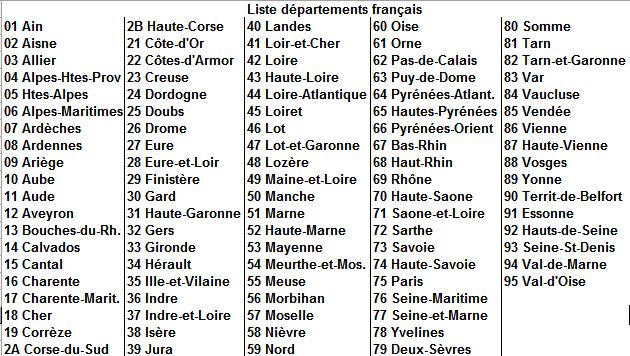 Département Département |
Unité | - | Mission |
|---|---|---|---|---|---|
| 29-08-1944 | Angleterre/Common. | Drôme | 111 Sq | Reconnaissance armée au S de Lyon (69) | |
| Localisation | En bordure de l'aérodrome du Creux de la Thine - Cne de Beaussemblant |
|---|---|
| Circonstances | Abattu par la flak - Se pose train rentré |
| Commentaires |
Décollage 15h00 du terrain Y-20 Sisteron (04) - Volait en n°4 de la section 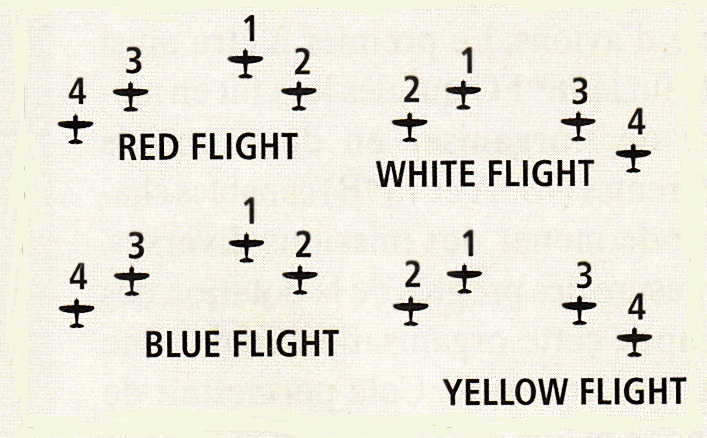 Formations chasseurs - Photo Fana de l'Aviation HS n°54Blue |
| Sources ** | J-L Delattre (sources: archives JLD / Aeronews) / J-L Maillet / Rapport E&E & ORB (source: National Archives UK) |
| Historique | 05/12/2011=Création - 19/02/2022=Ajout rapport E&E et ORB/code av,comm av,prénoms,comm Pil - 05/08/2026=Ajout compl rapp,comm Pil |
| Grade | Prenom | Nom | Poste | Corps | Etat |
Lieu d'Inhumation |
Commentaires |
|---|---|---|---|---|---|---|---|
| Sgt | Roland Eric Donald | Parker | Pil | RAF | Evadé | 1600876 - Né le 12/02/1922 Guildford, Surrey UK - Fils de Herbert Charles Frederick et Ivy Irene (Prince) Parker - Conjoint de Betty W Willcocks - Capturé vers Tain (26) le jour même - S'évade le 01/09/1944 - Retour base par Naples (Italie) le 20/10/1944 - Rapport WO 208/3324/2680 - †2008 Corby, Lincolns. |
| Fiche tech | Correspondance grades | Abréviations utilisées | Filières d'évasion | Camps de Pow | Bases RAF/USAAF | Utilitaires |
|---|
|
Rapport du Sgt Parker - (Capture : I took of in a Spitfire aircraft at 1400 hrs on 28 Aug 44 from an aerodrome at CISTERON near GAP (France, 1:250,000, SHEET 32, 095). I was detailed to "straf" targets south of LYONS, and while engaged on this my aircraft was hit by flak. I crash-landed near the town of TAIN (H 9811). I received severe head wounds and was knocked unconscious on landing. When I regained consciousness I found a German soldier with a rifle standing beside me. After I had bound up my head, he led me to a nearby road, where I was handed over to his Platoon Commander. I was then put in a staff car and driven West. After we had gone a few miles the car was embushed by two members of the Maquis armed with Tommy guns and mills bombs. The driver managed to turn the car, and we retreated the way we had come. From this point I got confused as to direction, but finally arrived south of TAIN, probably at or near the town of MAUVES (H 9608). I was taken to a house and given a brief routine interrogation by an officer who could speak English. I remained at this house until dark, when I was put into an ambulance and driven to an emergency hospital probably 15-20 miles north of MAUVES on the main LYONS road. I remained at the emergency hospital North of MAUVES from 28-29 Aug, and was then moved to a military hospital South of LYONS. On the evening of 30 Aug, I was moved to a hospital in LYONS. I remainde there until my escape. Escape : On 1 Sep it became obvious that the hospital was going to be evacuated, and I was told by one of the French nurses that I was to be taken to GERMANY. The evacuation was very hurried, and there was considerable confusion. The medical orderlies in my ward had been armed, but during the afternoon they disappeared, and I found I could leave the ward unchallenged. I was still wearing my R.A.F. uniform, which was covered with blood. No one took any notice of me, and I reached the outer courtyard of the hospital without interference. I was considering how to get out of the gate, which was guarded, when a Frenchman approached me and asked if I was english. I told him I was, and he told me to go and wait in a nearby corridor where some equipment was stored. At about 1600 hrs the Frenchman returned, and instructed me to carry a pile of blankets from a stack in the corridor - I did so, and following him, through the gate, to where a private car bearing a Red Cross flag was waiting. The blankets hid my uniform, and I was not challenged. I then got into the car and we drove away. I was taken to a farm on the outskirts of LYONS, where The Frenchman looked at my wound. He decided it was impossible for me to stay here. The same evening (1 Sep) I was taken by car to a civilian hospital in LYONS. I remained there until the arrival of the American Forces on 4 or 5 Sep. The American medical authorities sent me to a field hospital at Grenoble (J 62). On 9 Sep I was sent by air to the R.A.F. Hospital at Naples. On 18 Oct I was sent to the U.K. by air.Original) - (source : National Archives de Kew – WO208/3324/2680 - Traduction Ph Laroyenne): Capture : J'ai décollé dans un avion Spitfire à 14h00 le 28 août 44 de l’aérodrome de Sisteron [04] près de Gap (Feuille 32, bO9858). J'ai été détaché pour « mitrailler » des cibles au sud de Lyon, et pendant que j'y étais, mon avion a été touché par la flak. Je me suis écrasé près de la ville de Tain (bH9811). J'ai reçu de graves blessures à la tête et j'ai perdu connaissance à l'atterrissage. Quand j'ai repris conscience, j'ai trouvé un soldat allemand avec un fusil debout à côté de moi. Après avoir bandé ma tête, il m'a conduit à une route voisine, où j'ai été remis à son commandant de peloton. J'ai ensuite été mis dans une voiture d'état-major et conduit vers l'ouest. Après avoir parcouru quelques kilomètres, la voiture a été prise en embuscade par deux maquisards armés de mitraillettes et de "Mills Bombs". Le conducteur a réussi à faire tourner la voiture et nous avons reculé par où nous étions venus. À partir de ce point, je suis devenu confus quant à la direction, mais finalement nous sommes arrivés au sud de Tain, probablement à ou près de la ville de Mauves (bH9608). J'ai été emmené dans une maison et soumis à un bref interrogatoire de routine par un officier qui parlait anglais. Je suis resté dans cette maison jusqu'à la tombée de la nuit, quand j'ai été mis dans une ambulance et conduit à un hôpital d'urgence probablement à 15-20 miles au nord de Mauves sur la route principale de Lyon. Je suis resté aux urgences au nord de Mauves du 28 au 29 août, puis j'ai été transféré dans un hôpital militaire au sud de Lyon. Le 30 août au soir, j'ai été transféré dans un hôpital de Lyon. J'y suis resté jusqu'à mon évasion. Evasion : Le 1er septembre, il est devenu évident que l'hôpital allait être évacué, et l'une des infirmières françaises m'a dit que j'allais être emmené en Allemagne. L'évacuation a été très rapide et il y a eu beaucoup de confusion. Les aides-soignants de mon service avaient été armés, mais dans l'après-midi, ils ont disparu et j'ai découvert que je pouvais quitter le service sans être inquiété. Je portais encore mon uniforme R.A.F., qui était couvert de sang. Personne ne m'a remarqué et j'ai atteint la cour extérieure de l'hôpital sans interférence. Je réfléchissais à comment sortir de la porte, qui était gardée, quand un français s'est approché de moi et m'a demandé si j'étais anglais. Je lui ai dit que oui, et il m'a dit d'aller attendre dans un couloir voisin où du matériel était entreposé. Vers 16 heures, le Français est revenu et m'a demandé de porter une pile de couvertures dans le couloir - je l'ai fait, et l'ai suivi, à travers la porte, jusqu'à où une voiture privée portant un drapeau de la Croix-Rouge attendait. Les couvertures dissimulaient mon uniforme et je ne fus pas interpellé. Je suis ensuite monté dans la voiture et nous sommes partis. J'ai été emmené dans une ferme de la périphérie de Lyon, où le Français a examiné ma blessure. Il a décidé qu'il était impossible pour moi de rester ici. Le soir même (1er septembre) j'ai été conduit en voiture dans un hôpital civil de Lyon. J'y suis resté jusqu'à l'arrivée des forces américaines le 4 ou 5 septembre. Les autorités médicales américaines m'ont envoyé dans un hôpital de campagne à Grenoble (bJ6626). Le 9 septembre, j'ai été envoyé par avion dans un Hôpital de la R.A.F. de Naples. Le 18 octobre, j'ai été envoyé au Royaume-Uni par avion |